Here are the answers for the top 5 questions you should ask your gynaecologist about vaginal health.
1. Vaginal discharge varies, but a strong foul smell with itching or unusual discharge may signal infection. Get it checked.
2. Avoid strong soap or an intimate wash as it can disrupt the natural balance of bacteria and pH, causing irritation or infection. Gentle external washing with water or mild soap is best.
3. Hair removal is a personal choice. It’s not medically necessary, and need not be removed before doctor visits. If it causes irritation, discuss it with your doctor.
4. If discharge is heavy, curdy, yellow/green, or foul-smelling, with itchiness or pain, it may signal an infection that needs medical attention.
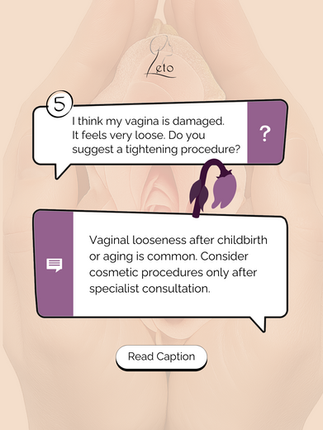
5. Surgical or non-surgical tightening options exist, but consider only after discussing risks and benefits with a specialist. You may also try pelvic floor exercises (Kegels) to help restore muscle strength and tone.
Your gynaec isn’t that judgy next-door aunty. They’re here to support you on all things intimate health. Ask freely, stay informed, and break the silence with #NoMoreWhispers
Written byLaya Krishnan, a dedicated volunteer supporting our mission for patient-first care.
Being diagnosed with a serious disease — whether it’s a chronic illness, cancer, autoimmune condition, or a complex reproductive health issue — can feel overwhelming. It’s common to experience fear, confusion, or even denial. But knowing how to respond can help you feel more in control and make better decisions for your health.
At Leto, we believe that education, clarity, and support are essential to helping patients move forward after a diagnosis. Here’s what you need to know:
1. Take Time to Understand Your Diagnosis
It’s okay if you don’t understand everything right away. Ask your doctor to explain your condition in simple terms. Get clarity on:
What the diagnosis means
How it might affect your daily life
Whether the condition is curable, manageable, or progressive
💡 Tip: Don’t hesitate to ask for written reports, second opinions, or educational materials. Patient education is your right. Read more about How to Prep for Your Doctor’s Appointment.
2. Know That You Have Options
Serious illness doesn’t mean limited choices. Often, there are multiple treatment paths available. The best healthcare providers will help you understand:
The pros and cons of each treatment
Expected outcomes
Side effects and recovery timelines
A patient-centered approach means you are actively involved in every treatment decision.
3. Build a Support Team
Healing is not just medical — it’s emotional too. Surround yourself with people you trust:
Family or friends who can attend appointments with you
Mental health professionals for counselling
Support groups, either online or in your community
4. Communicate and Ask Questions
You should never feel like a passive observer in your own care. Make sure your healthcare provider has a system in place for patient query handling — so you can get timely answers to doubts about medications, symptoms, or reports.
Key reminder: If something doesn’t make sense, ask again. You deserve to understand your care.
In moments of stress, it’s easy to overlook the importance of patient safety and quality standards. Choose a facility that follows:
Updated clinical protocols
Safe practices for medications and procedures
Regular audits and outcome tracking
This ensures you receive care that is not only effective, but also safe and accountable.
How Leto Centre Supports You After a Serious Diagnosis
At Leto, we are committed to making your care journey easier, safer, and more informed. Receiving a serious health diagnosis can be daunting. At Leto, we follow a patient-first approach to ensure you feel informed, supported, and empowered every step of the way.
Informed, Supported, Safe — Every Step of the Way.
Best Treatment Plans, Tailored for You
Every patient receives a personalised treatment plan, designed according to clinical findings, best practices, and your individual needs. We adhere to high-quality standards and evidence-based protocols, ensuring you receive the most effective care possible.
Patient-Centred, Multidisciplinary Care
Your care team will include specialists from relevant fields, working together to manage your condition holistically. Our patient-centred approach means your values, preferences, and concerns are respected at every stage.
Patient Education & Transparent Communication
Understanding your condition is key to healing. We prioritise patient education — taking time to explain your diagnosis, treatment options, risks, and expected outcomes. We also offer printed and digital resources to support your learning.
Efficient Patient Query Handling
You’ll never be left in the dark. Whether it’s a doubt about medications or a question during follow-up, our team ensures timely and respectful query handling, both in person and over phone or email.
Support Beyond the Diagnosis
We recognise the emotional impact of serious illness. Alongside medical care, we offer psychological support and care coordination — so you always have guidance, reassurance, and practical help.
Your Safety Comes First
From accurate diagnostics to safe procedures, your well-being is our top priority. We maintain strict patient safety protocols and uphold the highest standards in infection control, data confidentiality, and clinical governance.
At Leto, we combine medical expertise with genuine compassion. We’re here for you — with clarity, care, and confidence.
A serious diagnosis may change your life — but with the right support, it doesn’t have to define it. At Leto, we walk with you through the uncertainty, helping you find strength, clarity, and the best possible path forward.
Redefine your healthcare experience. Connect with us today!
About the Author
This article was written with care by Laya Krishnan, a dedicated volunteer supporting our mission for patient-first care.
Know more about her journey and work on Instagram: @la.ya4006
When it comes to healthcare services, understanding the financial aspects is just as important as knowing the medical procedures themselves. One critical area that often confuses patients is the medical refund policies related to cancellations and returns. Whether you are booking a diagnostic test, a consultation, or a treatment, knowing your rights and the healthcare provider’s policies can save you time, money, and stress.
Hospital reception with refund policy brochure
Understanding Medical Refund Policies: What You Need to Know
Medical refund policies vary widely depending on the healthcare provider, the type of service, and the region. These policies outline the conditions under which a patient can request a refund or cancel a service without penalty.
Some key points to consider include:
Time limits for cancellations: Many providers require cancellations to be made within a specific time frame, such as 24 or 48 hours before the appointment.
Non-refundable fees: Certain charges, like consultation fees or lab test processing fees, may be non-refundable.
Documentation requirements: You may need to provide proof, such as a medical certificate or a cancellation confirmation.
Partial refunds: In some cases, only a portion of the payment is refunded, especially if the service has already been partially rendered.
For example, if you book a diagnostic test and cancel it a day before, you might get a full refund. But if you cancel on the same day, the provider might retain a cancellation fee.
Understanding these nuances helps you avoid surprises and plan your healthcare expenses better.
What is the return refund and cancellation policy?
The return refund and cancellation policy in healthcare is designed to protect both the patient and the provider. It ensures transparency and fairness in financial transactions related to medical services.
Typically, this policy covers:
Refund eligibility: Conditions under which refunds are granted, such as service unavailability or errors in billing.
Cancellation procedures: Steps to follow when canceling an appointment or service.
Time frames: Deadlines for requesting refunds or cancellations.
Exceptions: Situations where refunds are not applicable, like emergency services or consumable medical supplies.
For instance, if a lab test kit is opened or used, it usually cannot be returned or refunded. On the other hand, if a scheduled surgery is postponed by the hospital, patients are often entitled to a full refund or rescheduling without extra charges.
Healthcare providers often publish their policies online for easy access. You can review the refund and cancellation policy of your provider to understand the specific terms.
Common Challenges Patients Face with Medical Refunds
Despite clear policies, patients often encounter difficulties when seeking refunds or cancellations. Some common challenges include:
Lack of clarity: Policies may be written in complex legal language, making them hard to understand.
Delayed refunds: Processing times can be long, causing financial inconvenience.
Disputes over eligibility: Providers and patients may disagree on whether a refund is justified.
Hidden charges: Some fees may not be clearly disclosed upfront, leading to unexpected costs.
To avoid these issues, it is advisable to:
Read the policy carefully before booking.
Keep all receipts and communication records.
Contact customer support promptly if you need to cancel or request a refund.
Ask for written confirmation of cancellations and refunds.
Being proactive and informed can help you navigate these challenges smoothly.
Tips for Managing Your Healthcare Bookings and Refunds
Managing your healthcare appointments and payments effectively can reduce the risk of losing money due to cancellations or misunderstandings. Here are some practical tips:
Book through reputable providers: Choose healthcare services with transparent and patient-friendly policies.
Confirm appointment details: Double-check dates, times, and services to avoid last-minute cancellations.
Use online portals: Many providers offer online booking and cancellation options, which are faster and more convenient.
Understand the refund timeline: Know how long it takes to get your money back and plan accordingly.
Keep communication polite and professional: This often helps in resolving disputes amicably.
For example, if you know you might need to reschedule, inform the provider as early as possible to maximize your chances of a full refund.
Patient booking medical appointment online
How Healthcare Providers Can Improve Refund and Cancellation Experiences
Healthcare providers play a crucial role in making refund and cancellation processes smooth and patient-friendly. Some ways they can improve include:
Clear communication: Use simple language and highlight key points in policies.
Flexible cancellation windows: Allow reasonable time frames for cancellations without penalties.
Efficient refund processing: Minimize delays and keep patients informed about the status.
Customer support training: Equip staff to handle refund requests empathetically and professionally.
Digital solutions: Implement user-friendly online systems for managing appointments and refunds.
By adopting these practices, providers can build trust and enhance patient satisfaction.
Navigating medical refund policies can seem daunting, but with the right knowledge and approach, you can protect your interests and ensure a hassle-free healthcare experience. Always take the time to review the refund and cancellation policy before committing to any medical service. This simple step can save you from unexpected costs and stress later on.
At Leto, we do more than treat symptoms—we care for the whole you. Our unique approach blends advanced medical services with compassionate, personalized care to support your physical, emotional, and overall well-being. Whether it’s a consultation, diagnosis, or treatment, we’re here to guide you on a healthier, happier journey.
Redefine your healthcare experience. Connect with us today!